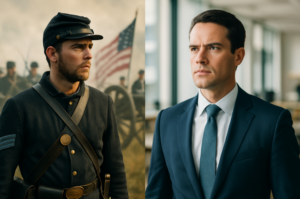

How a 160-year-old battlefield still holds the answers to your toughest strategic calls
In business, we love to talk about agility, leadership, and data-driven strategy. But too often, we make decisions the way General Robert E. Lee did at Gettysburg—on instinct, outdated assumptions, and overconfidence.
The Battle of Gettysburg (July 1863) wasn’t just a turning point in the American Civil War. It was a masterclass in decision-making under pressure, with lessons that still apply in today’s boardrooms, war rooms, and Zoom calls.
Here’s what every leader—whether in marketing, operations, product, or strategy—should take from that pivotal clash of ideologies and egos.
1. Unclear Objectives Kill Strategy
Lee entered Pennsylvania with no clearly defined goal. Was he trying to destroy the Union army? Force a peace deal? Threaten Washington? His army marched confidently—but toward what?
How often do companies do the same? They set ambitious goals without alignment. Teams confuse tactics with strategy. Or worse—everyone’s executing a plan without knowing why.
👉 Lesson: Define your objective with ruthless clarity. Misalignment at the top cascades into confusion at the front.
2. Assumptions Are the Silent Killers
Lee believed the Union army was disorganized and demoralized. He based his most aggressive moves—like Pickett’s Charge—on that assumption. It proved fatally wrong.
Sound familiar?
- Peloton assumed post-COVID demand would remain sky-high and overbuilt inventory.
- Quibi assumed people wanted short-form premium content—but didn’t validate user habits.
- BlackBerry assumed keyboard loyalty would beat touchscreens.
👉 Lesson: Assumptions are easy. Validation is hard. Test before you bet the farm.
3. Get Comfortable in the Fog of War
General Meade took command of the Union army just three days before the battle. With little intel and high uncertainty, he made swift, pragmatic decisions that ultimately saved his side.
In modern business, you’ll never have perfect data, full clarity, or total buy-in. Strategy dies in the waiting room.
👉 Lesson: Great leaders act under uncertainty. Build feedback loops. Adapt quickly. Don’t freeze.
4. Empower People at the Front
Colonel Joshua Chamberlain didn’t wait for orders when the Union flank was crumbling. He made the call to charge—saving the battle.
Do your people have that kind of latitude? Or do they need a five-layer sign-off to fix a customer issue or respond to a competitor?
👉 Lesson: Speed lives at the edges. Empower decision-makers close to the action. If your team has to ask permission, you’re already too late.
5. Past Success Can Be a Trap
Lee had won previous battles by being bold. He assumed the same tactics would work again. They didn’t.
This happens in business constantly. A successful product launch becomes a rigid formula. A hit campaign becomes a template. And suddenly, you’re the last one to realize the world moved on.
👉 Lesson: What worked before may not work again. Context matters. Don’t mistake muscle memory for strategy.
6. Know When to Pull Back
After Pickett’s Charge failed, Lee didn’t double down. He didn’t escalate. He preserved what remained of his army and retreated.
Contrast that with how many leaders keep pouring resources into a failing idea because “we’ve already invested too much.”
👉 Lesson: Smart retreats are strategic. Know when to stop. Momentum is not justification.
7. Ego and Groupthink Kill Good Decisions
Several Confederate officers questioned Lee’s plans—but didn’t push back. The result: 12,000 men sent across open ground toward certain defeat.
In business, the same dynamic plays out when people are afraid to challenge authority or rock the boat. The room nods, the PowerPoint sails through—and disaster unfolds.
👉 Lesson: Build a culture where dissent is valued, not punished. Decision-making improves when people feel safe to challenge flawed ideas.
Final Charge: Strategy Is Human
Gettysburg reminds us that in moments of complexity and crisis, decision-making isn’t about frameworks or dashboards. It’s about judgment, clarity, and the courage to challenge assumptions—even your own.
Strategy is human. And leadership isn’t just about making the bold call. It’s about knowing when not to.
Because if you’re charging across the field, clinging to old tactics and unchecked beliefs, you’re not a visionary—you’re Pickett.